Picking the right aerial category
- Vertical access on clean floors: In dense aisles or mezzanines, a vertical mast lift reaches overhead tasks with a small footprint.
- Broad, straight-up work indoors: Electric scissor lifts cover routine maintenance where slab conditions are reliable and power is nearby.
- Uneven exterior approaches: Rough-terrain scissor lifts stabilize on compacted gravel or patched pavement common at older industrial sites.
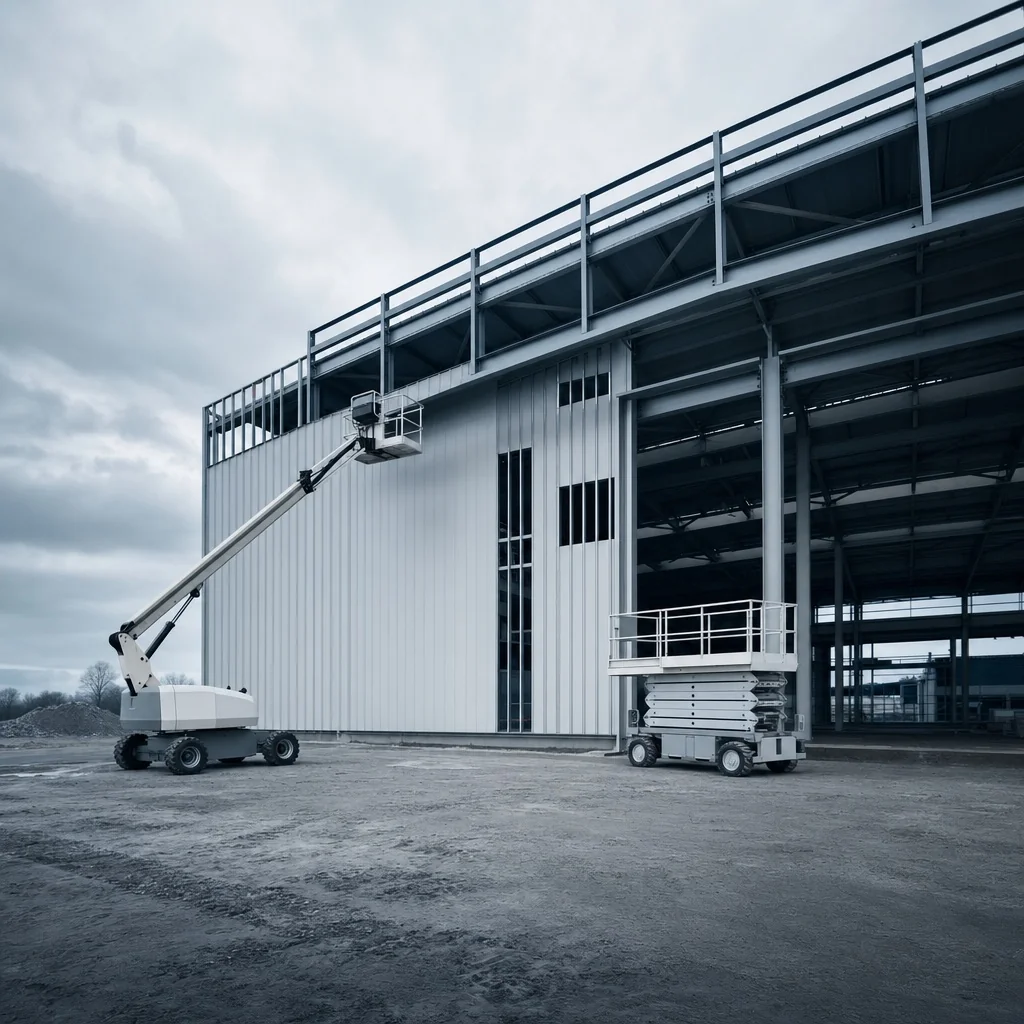
- Outreach around obstacles: Articulating booms navigate over canopies and piping; telescopic booms favor straight reach along façades.
Actual conditions, unit instructions, and site procedures govern elevated work.
Route and surface in the regional climate
- Winter moisture and plow berms change how machines travel. Confirm gate widths, slope, and whether the machine can sit below the task or must work alongside it.
- For interior routes in distribution buildings, measure aisle width, turning radius, and door thresholds to avoid bottlenecks.
Material handling around Cleveland’s industry mix
- For palletized or bulk materials, forklifts fit dock work; telehandlers support exterior staging where surfaces shift through freeze–thaw.
Site products that keep work moving
- Power and light: Generators and light towers maintain visibility and tool power through early sunsets and wet conditions.
- Storage and security: Storage containers protect parts in high humidity; place on firm, drained pads.
- Perimeter control: Temporary fencing and barricades separate work zones from traffic in windy, snowy yards.
Lake-effect readiness
- Plan for moisture-resistant electrics, stable footing on mixed surfaces, and staging that survives repeated plowing. Nearby communities face similar patterns, so a single plan can cover multiple sites around Cleveland.
For equipment specifics or to discuss local conditions, see category pages or reach out via /contact/ and review company details at /about/.